 Paraguay
Cross Border Transportation: A Traveler’s Guide

Cross border transportation is the coordinated movement of people and goods across international boundaries under specialized logistics, regulatory compliance, and multi-stakeholder coordination that ensures timely, secure transit. For travelers planning international trips, this means far more than simply crossing a line on a map. Regulatory bodies like the U.S. Department of Transportation and national customs agencies set the rules that govern every crossing. Missing a single document or filing deadline can turn a smooth trip into a multi-day ordeal. Understanding how cross border transport works gives you a real advantage before you ever reach the border.
What are the main transport modes used in cross border trips?
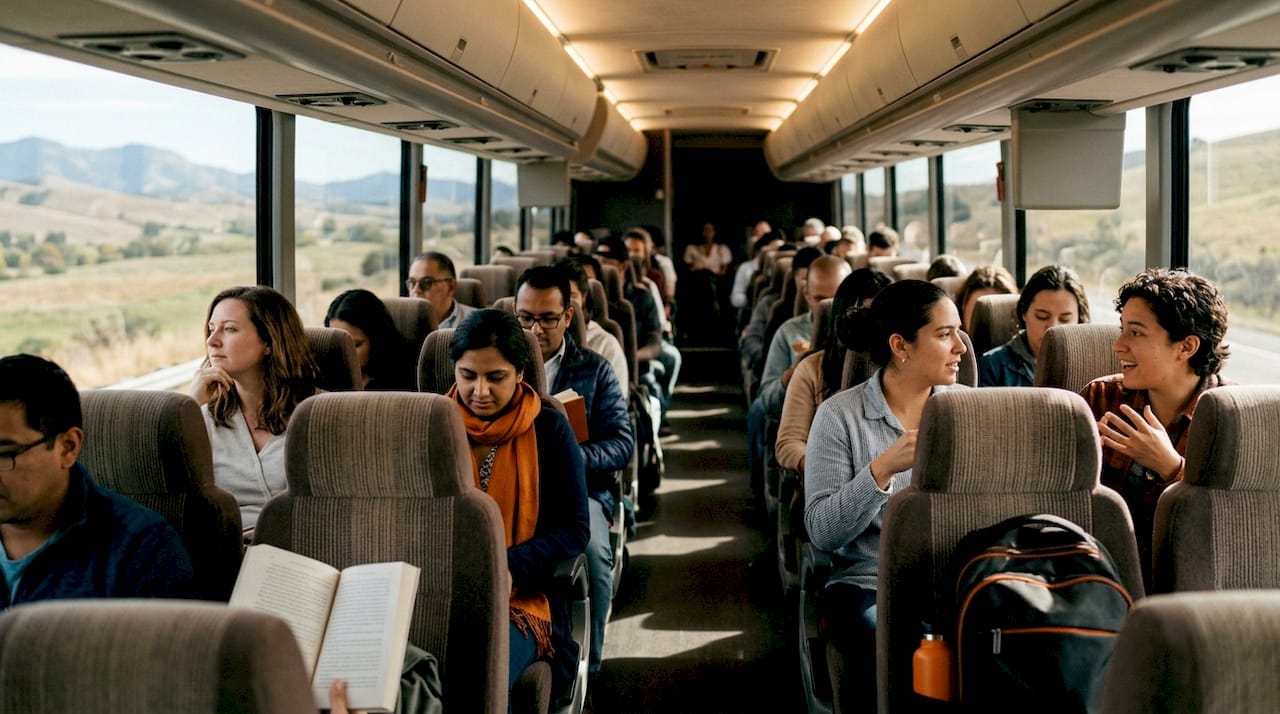
Land transport is the most common mode for cross border trips in the Americas, covering private transfers, buses, and freight trucks. Private transfers give travelers the most control over timing and routing, which matters enormously when border processing times are unpredictable. Buses offer lower cost but sacrifice flexibility, and delays at one checkpoint ripple through the entire schedule.
Air travel handles longer international distances and typically moves passengers across borders in hours rather than days. Air freight transit takes 3–7 days for international shipments, while passenger flights compress that timeline dramatically. Rail and sea options exist in specific corridors but remain niche choices for most travelers in South America.
Multimodal transport combines two or more modes into a single coordinated trip. A traveler might fly into Asunción, then use a private ground transfer to reach a destination in Argentina or Brazil. Each handoff between modes is a potential delay point, so coordination between providers is critical.
- Private transfer: Fixed pickup, door-to-door routing, no shared stops
- Bus: Lower cost, shared schedule, limited flexibility at border crossings
- Air: Fast for long distances, requires separate ground transport at each end
- Rail/sea: Specialized corridors, rarely the primary mode for travelers in Paraguay
Pro Tip: Book your ground transfer before your flight lands. Border crossing times vary by hour and day, and a confirmed pickup removes one major variable from your trip.
How does customs clearance affect cross border transportation?
Customs compliance is the single most common source of transit disruption in cross border transportation. Missed documents or late filings cause days-long delays at borders. That is not an exaggeration. One missing form can hold a vehicle at a checkpoint while the rest of your schedule unravels.
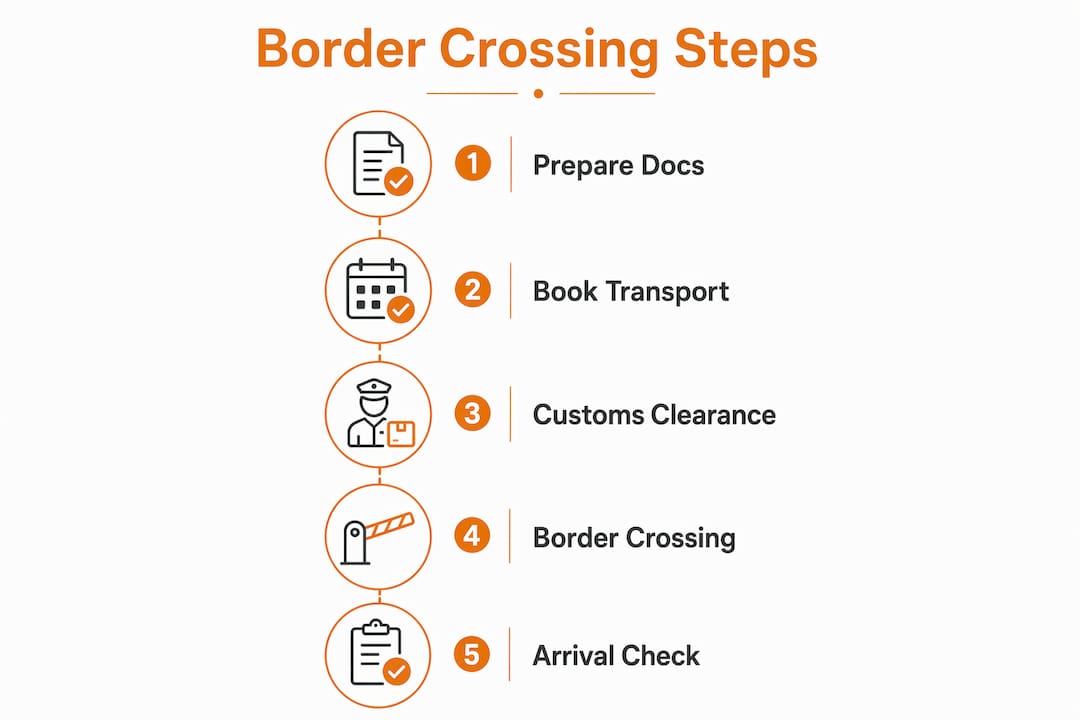
The customs clearance process requires travelers and shippers to present accurate, complete documentation before arrival. For freight, this includes advance manifest filing through systems like ACE (Automated Commercial Environment) in the United States or ACI (Advance Commercial Information) in Canada. For travelers, valid passports, visas where required, and any relevant permits must be ready before reaching the checkpoint.
Trade agreements directly affect what you pay and how fast you clear. The USMCA enables duty reductions for qualifying goods when a valid Certificate of Origin is on file. Travelers carrying commercial goods or samples need to understand this. Failing to maintain that documentation means paying full tariffs and losing time.
Digital filing mandates have reshaped border crossing speed since 2025. Customs agencies now require shipment data to be in their systems before the vehicle arrives. Late digital submissions trigger holds that no amount of on-site paperwork can fix quickly.
- Gather all travel documents at least 48 hours before departure
- Verify visa requirements for every country on your route
- Declare all goods accurately on customs forms, including gifts and samples
- For freight or commercial goods, file advance manifests through the required digital system
- Keep copies of all documents in both digital and physical formats
Pro Tip: Photograph every document before you travel. If physical copies are lost or damaged at the border, digital backups on your phone can keep the process moving.
| Document type | Required for | Common mistake |
|---|---|---|
| Valid passport | All international crossings | Expired or damaged pages |
| Visa | Country-specific entry | Wrong visa category |
| Certificate of Origin | USMCA duty reductions | Missing or unsigned form |
| Advance manifest | Freight and commercial goods | Late digital submission |
| Customs declaration | All travelers | Incomplete or inaccurate entries |
What logistical coordination ensures smooth cross border transportation?
Effective cross border logistics requires multiple stakeholders working from a single shared system. Integrating carriers, border drayage services, and customs brokers into one digital workflow prevents the communication silos that cause most delays. When each party operates independently, updates get lost and no one has a complete picture of where things stand.
Control towers and real-time visibility platforms solve this problem by giving every stakeholder access to the same transit milestones and customs status. Operational teams that rely on phone calls and emails to chase updates lose hours every day. Unified end-to-end management under a single provider drastically reduces errors compared with fragmented communication across separate brokers and carriers.
For travelers, this principle applies directly. A private transfer service that tracks your flight, monitors border conditions, and communicates proactively eliminates the guesswork that makes international trips stressful. You should not have to call three different people to find out where your driver is.
- Single provider coordination: One point of contact for pickup, transit, and delivery
- Real-time tracking: Live updates on vehicle location and border wait times
- Proactive communication: Driver or service alerts you to changes before they become problems
- Customs broker alignment: For freight travelers, your broker and carrier share data automatically
Pro Tip: Ask your transport provider directly: “Do you track my flight?” A provider that does not monitor flight arrivals will not adjust for delays, and you will wait at the airport or miss your pickup entirely.
What safety and practical tips should travelers know for border crossings?
Personal safety at border crossings depends on preparation and awareness. Busy land crossings in South America can involve long queues, unfamiliar procedures, and variable wait times depending on the time of day. Arriving with complete documentation and a confirmed transport arrangement removes the two biggest stress factors.
Timing matters more than most travelers realize. Advance planning for pickup and dropoff with border processing in mind prevents the cascading delays that come from underestimating crossing times. Early morning crossings typically move faster than midday or late afternoon. If your schedule allows, plan your border crossing for before 9:00 AM.
Selecting a reliable private transfer service is the most direct way to control your experience. Services that offer fixed pricing, English-speaking drivers, and flight tracking remove the three most common points of friction for international travelers. Door-to-door routing means you do not need to arrange secondary transport after clearing customs.
- Keep your passport and travel documents in a secure, easily accessible location
- Do not leave bags unattended at any point during the crossing process
- Carry local currency for any fees or tolls that arise at the border
- Confirm your driver’s contact information and vehicle details before departure
- Monitor your itinerary for any changes to border operating hours or checkpoint status
Key Takeaways
Reliable cross border transportation depends on complete documentation, coordinated stakeholders, and a transport provider that manages timing proactively rather than reactively.
| Point | Details |
|---|---|
| Documentation is non-negotiable | Missing a single document causes multi-day delays at international borders. |
| Customs compliance is ongoing | Digital filing mandates require data in customs systems before your vehicle arrives. |
| Single-provider coordination wins | One provider managing all handoffs reduces errors and keeps your schedule intact. |
| Timing affects crossing speed | Early morning crossings move faster; plan your schedule around border processing times. |
| Private transfers offer the most control | Fixed pricing, flight tracking, and door-to-door service eliminate the most common friction points. |
What most travelers get wrong about crossing borders
Cross border transport is not domestic travel with an extra stop. That misconception is the root cause of most problems I see travelers encounter. People assume the border is a minor inconvenience, pack their documents loosely, and book transport without asking the right questions. Then they spend four hours at a checkpoint that should have taken forty-five minutes.
The most disruptive delays start small. A single missing document, one unanswered customs query, or a driver who did not check the border wait time before departure. These are not dramatic failures. They are small process errors that compound quickly. I have watched travelers with perfect itineraries lose an entire day because their transfer provider did not communicate a checkpoint closure until they were already en route.
Compliance is not a checklist you complete once. Proactive compliance with evolving regulations is an ongoing practice, especially as digital filing mandates and tariff structures continue to shift. Travelers carrying commercial goods need to treat this like a professional discipline, not an afterthought.
The travelers who cross borders without incident share one habit: they chose a single provider who owned the entire process. Not the cheapest option. Not the most convenient booking app. A provider with real accountability from pickup to destination. That single decision removes more risk than any other preparation step you can take.
— David
Paraguaytransport: private transfers built for international travelers
Planning a cross border trip through Paraguay means dealing with airport pickups, intercity routes, and border crossings where timing and communication are everything. Paraguaytransport specializes in exactly this.
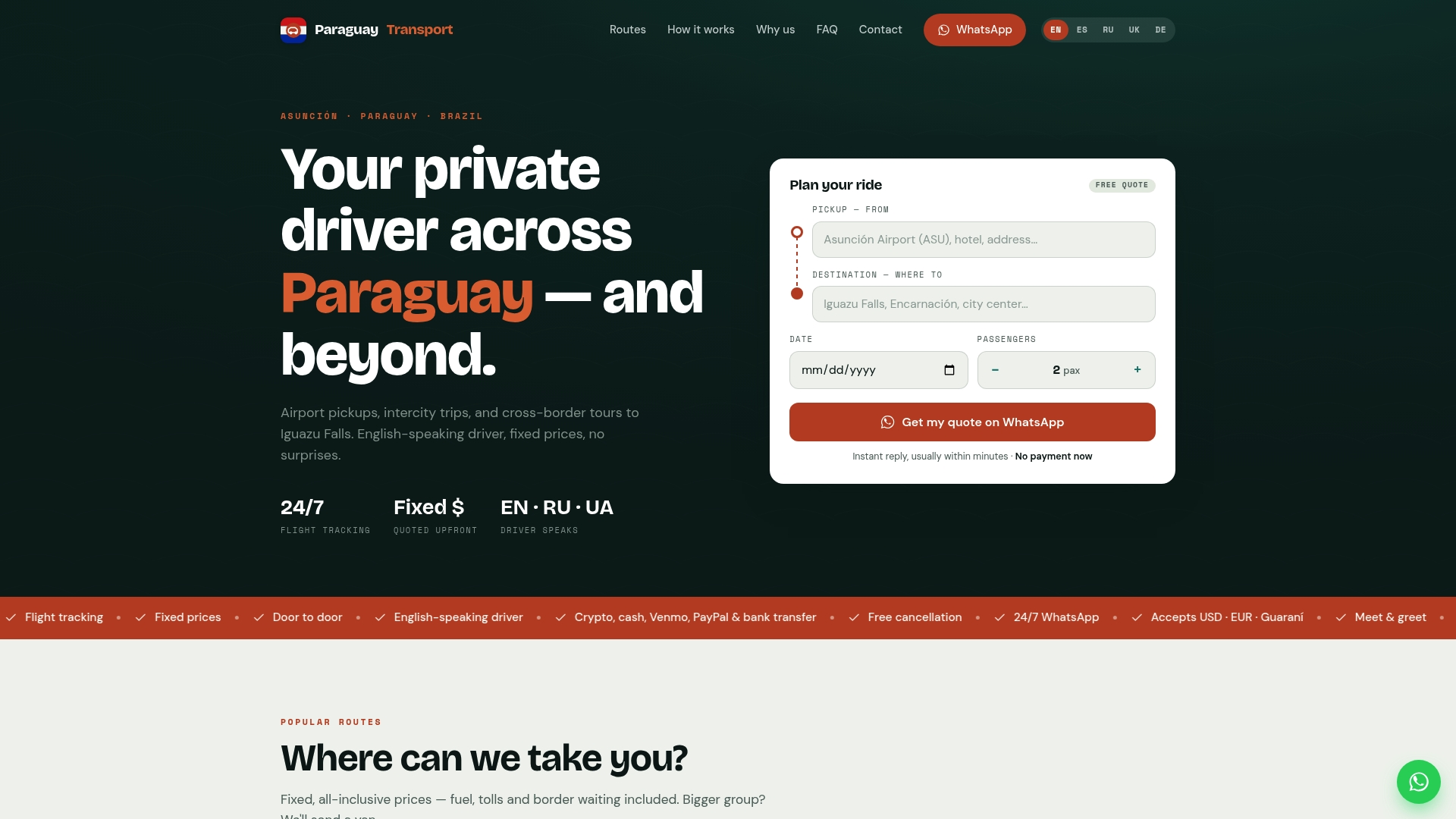
Paraguaytransport provides private driver services with fixed upfront pricing, English-speaking drivers, and active flight tracking so your pickup adjusts to your actual arrival, not your scheduled one. Door-to-door routing covers airport transfers, intercity trips, and cross border tours without additional handoffs. Whether you are a tourist visiting the Triple Frontier or a business traveler moving between Asunción and Buenos Aires, Paraguaytransport gives you one point of contact and zero hidden fees.
FAQ
What is cross border transportation?
Cross border transportation is the coordinated movement of people or goods across international boundaries under regulatory compliance and logistics management. It requires proper documentation, customs clearance, and coordinated transport providers to avoid delays.
What documents do I need for a cross border trip?
A valid passport is required for all international crossings, along with any applicable visas and a completed customs declaration. Travelers carrying commercial goods may also need a Certificate of Origin to qualify for duty reductions under agreements like USMCA.
Why do border crossing delays happen?
Most delays start with small process failures like a missing document or a late digital filing. These errors trigger customs holds that can last hours or days, disrupting the entire travel schedule.
How do I choose a reliable cross border transport provider?
Choose a provider that offers fixed pricing, real-time flight tracking, and door-to-door service with no additional transfers. Reliable logistics capability reduces failure points more effectively than choosing the lowest-cost option.
What is the fastest way to clear a land border crossing?
Arrive with complete documentation, file any required advance manifests digitally before departure, and cross early in the morning when queues are shortest. A confirmed private transfer with a driver who monitors border conditions in real time also reduces wait time significantly.
Recommended
Need a ride in Paraguay?
Fixed-price transfers, airport pickups and day trips — quoted upfront on WhatsApp.