 Paraguay
Door-to-Door Transportation for Seniors: A Caregiver’s Guide

Door-to-door transportation for seniors is defined as a ride service that picks up an older adult directly from their home and delivers them to their destination, without requiring them to walk to a bus stop or curb. This goes well beyond what standard public transit offers. The Americans with Disabilities Act (ADA) mandates that public transit systems provide paratransit services for riders who cannot use fixed-route buses, but that baseline curb-to-curb standard often falls short for seniors with mobility or cognitive challenges. The demand is real: 80% of family caregivers in the U.S. provide transportation for seniors or disabled persons, totaling over 42 million people. That number tells you this is not a niche concern. It is one of the most common and pressing responsibilities caregivers face.
What types of door-to-door transportation services are available to seniors?
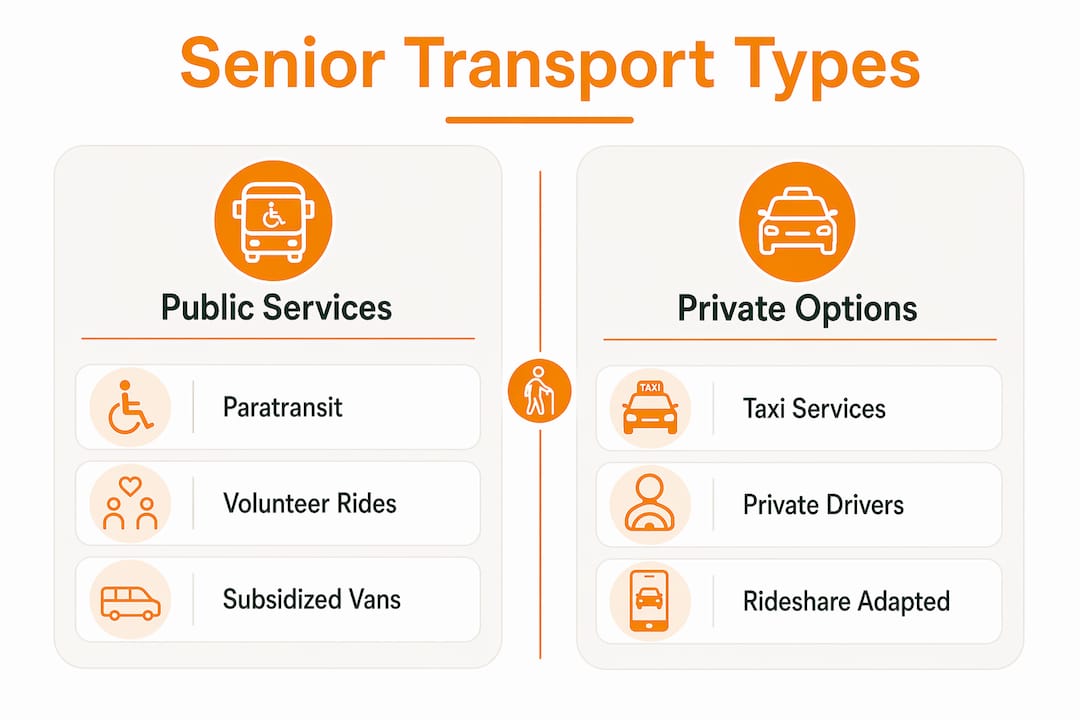
Senior transport services fall into several distinct categories, and knowing the difference helps you match the right option to your loved one’s needs.
The main types include:
- Public paratransit. The ADA requires transit agencies to offer paratransit for eligible riders. These services typically operate curb-to-curb, meaning the driver waits at the vehicle, not at the front door.
- Volunteer driver programs. Community organizations and faith groups run volunteer programs that provide door-to-door rides for seniors and disabled adults. These require advance booking, often several days out.
- Non-emergency medical transportation (NEMT). Medicaid covers NEMT for eligible seniors traveling to medical appointments. Coverage and quality vary by state and managed care plan.
- Private and commercial transport services. These include private driver companies and specialized senior transport operators. They typically offer the most flexibility, including wheelchair-accessible vehicles and trained drivers.
- Senior citizen shuttle services. Many senior centers and assisted living facilities operate scheduled shuttles for group trips to grocery stores, pharmacies, and medical offices.
The terminology matters more than most caregivers realize. Curb-to-curb means the driver stays at the vehicle. Door-to-door means the driver walks the senior to and from the vehicle at both ends of the trip. Door-thru-door assistance means the driver escorts the senior all the way inside the destination building, through lobbies, up stairs, and to the check-in desk. Each level of service addresses a different degree of need.
Eligibility requirements also differ. Public paratransit requires a formal ADA eligibility determination. Volunteer programs may simply ask for age or income verification. Private services generally have no eligibility requirements beyond booking and payment.
How do reservations and scheduling typically work for senior transportation?
Scheduling is where most caregivers run into friction. Reservation windows vary widely depending on the service type. On-demand private services can dispatch a driver in as little as 30 minutes. Volunteer and subsidized programs typically require 2 to 5 business days of advance notice. That gap has real consequences for urgent medical needs.
A practical scheduling approach for caregivers:
- Identify recurring trips first. Medical appointments, dialysis, and therapy sessions happen on predictable schedules. Book these as standing reservations.
- Set up standing orders. Recurring standing reservations reduce anxiety by assigning the same driver consistently for medical appointments. Familiar faces matter enormously to seniors, especially those with dementia.
- Book subsidized rides as early as possible. Volunteer and paratransit programs have limited capacity. Waiting until the day before almost always results in no availability.
- Keep a cancellation policy on file. Most programs require 24-hour notice to cancel without a penalty. Missing this window can result in suspension from the service.
- Have a backup plan. Even reliable programs experience driver shortages. Identify a private transport option you can call on short notice.
Booking method is also a real consideration. About 80% of seniors prefer flagging down taxis or booking by phone over using smartphone apps. A senior-focused call taxi service in Seoul reached 44,000 rides in its first year largely by offering phone booking through a city hotline. That data point applies directly to how you should set up your loved one’s transport arrangements. Phone-based booking removes a significant barrier for older adults who are not comfortable with apps.
Pro Tip: When calling to book, ask specifically whether the driver will come to the front door or wait at the curb. The answer determines whether your loved one can manage the trip independently.
What is door-thru-door assistance and why does it matter?
Door-thru-door service is the highest level of personal assistance in senior transport, and it is the one most caregivers do not know to ask for until something goes wrong.
The three service levels compared:
- Curb-to-curb: Driver waits at the vehicle. Senior walks to and from the car independently.
- Door-to-door: Driver walks the senior to and from the vehicle at both the pickup and drop-off locations.
- Door-thru-door: Driver provides full physical assistance from the senior’s front door, through lobbies, up stairs, and into the destination interior.
Door-thru-door is not a luxury. For a senior with Parkinson’s disease, a recent hip replacement, or moderate dementia, the gap between the car and the clinic entrance is where falls happen. Trained drivers in door-thru-door programs wait patiently during transfers, assist with doors, and provide physical support at every transition point. That consistent presence reduces fall risks and travel anxiety for vulnerable seniors in a measurable way.
“The goal of door-to-door service is dignified aging. It is not just about getting from one place to another. It is about providing supportive assistance that preserves independence and safety at every step of the trip.”
Consider a senior with moderate cognitive decline who needs weekly lab work. Without door-thru-door service, she exits the vehicle, becomes disoriented in the parking lot, and cannot find the building entrance. With a trained driver who walks her inside and hands her off to the front desk, the appointment happens without incident. That difference is the entire value proposition of this service level.
How can caregivers evaluate and select the best transportation options?
The best starting point is a phone call to your local Area Agency on Aging. These federally funded agencies employ mobility managers whose specific job is to help caregivers navigate the fragmented senior transportation system. They know which local programs have availability, which accept Medicaid, and which serve rural zip codes.
Beyond that initial call, evaluate options across these dimensions:
| Evaluation factor | What to look for |
|---|---|
| Vehicle accessibility | Wheelchair ramps, grab bars, and adequate interior space |
| Driver training | Certification in senior assistance, dementia awareness, and first aid |
| Service level | Confirm curb-to-curb vs. door-to-door vs. door-thru-door in writing |
| Scheduling flexibility | On-demand availability vs. advance booking requirements |
| Cost and coverage | Out-of-pocket cost, Medicaid acceptance, and geographic service area |
| Driver consistency | Whether the same driver handles recurring trips |
Driver consistency deserves special attention. A familiar driver who knows your loved one’s routine, physical limitations, and communication style provides a level of safety that no scheduling app can replicate. When evaluating private transport services, ask directly whether they assign consistent drivers for standing appointments.
Pro Tip: Ask every provider for a written description of their service level. “Door-to-door” means different things to different companies. Get the definition in writing before the first trip.
Dignity is a non-negotiable factor. Affordable senior transportation that treats older adults as burdens rather than passengers creates anxiety and resistance. Your loved one is more likely to keep medical appointments when the transport experience feels respectful and predictable.
What common challenges do families face with senior transportation?
Even well-organized caregivers run into obstacles. Knowing the most common ones in advance helps you plan around them.
- Rural availability gaps. Volunteer programs and paratransit routes concentrate in urban and suburban areas. Seniors in rural counties often have no subsidized options within a reasonable distance.
- Long lead times. Subsidized programs that require 2 to 5 days of advance booking cannot accommodate urgent or same-day medical needs. Shared rides in public subsidy programs also require scheduling flexibility, since routes adjust based on other passengers.
- Technology barriers. Many booking platforms assume smartphone proficiency. Seniors who are not comfortable with apps face real friction when trying to arrange rides independently.
- Multiple-stop trips. A single outing that includes a pharmacy stop after a doctor’s appointment can exceed what many programs allow. Confirm multi-stop policies before booking.
- Communication gaps. Providers change drivers, routes, and pickup times without always notifying caregivers. Build a direct contact number for the dispatcher into your routine.
The most effective response to these challenges is redundancy. Rely on one primary service for recurring trips and maintain a relationship with a private transport provider for gaps and emergencies.
Key Takeaways
Reliable elderly door-to-door rides require caregivers to match the senior’s physical and cognitive needs to the correct service level, book recurring trips as standing reservations, and maintain a backup transport option for urgent needs.
| Point | Details |
|---|---|
| Know the service levels | Curb-to-curb, door-to-door, and door-thru-door serve different needs; confirm which level applies before booking. |
| Book recurring trips as standing orders | Standing reservations assign consistent drivers and reduce anxiety for seniors with frequent appointments. |
| Start with Area Agencies on Aging | Mobility managers help caregivers find local, subsidized, and specialized transport options efficiently. |
| Phone booking removes barriers | Most seniors prefer phone-based booking; choose providers that support it to reduce friction. |
| Build in a backup option | Subsidized programs have capacity limits; always have a private transport contact for urgent or same-day needs. |
What I have learned about senior transport after years of watching families struggle
The single biggest mistake caregivers make is treating transportation as an afterthought. They spend months researching the right specialist or care facility, then scramble to figure out how their loved one will actually get there. Transport is not logistics. It is care.
What I have seen work consistently is the standing reservation with a trusted driver. When a senior with dementia sees the same face every Tuesday morning, the trip becomes routine rather than a source of fear. That predictability has a direct effect on whether the appointment actually happens. Families who treat transport as a relationship rather than a transaction get far better outcomes.
The door-thru-door distinction is the one I push hardest. Most caregivers do not know to ask for it. They book a “door-to-door” service, assume their loved one is covered, and then get a call from the clinic saying their parent never made it inside. Ask the question explicitly. Confirm it in writing. Then confirm it again on the day of the first trip.
My honest advice: do not wait for a crisis to build your transport plan. Map out every recurring appointment your loved one has, identify the right service level for each, and set up standing reservations before you need them. The families who do this work in advance are the ones who are not making panicked calls on a Monday morning.
— David
Paraguaytransport: private driver service for families who need reliability
Families traveling to or within Paraguay with an elderly relative need a transport provider who treats every pickup as a personal commitment, not a dispatch number.
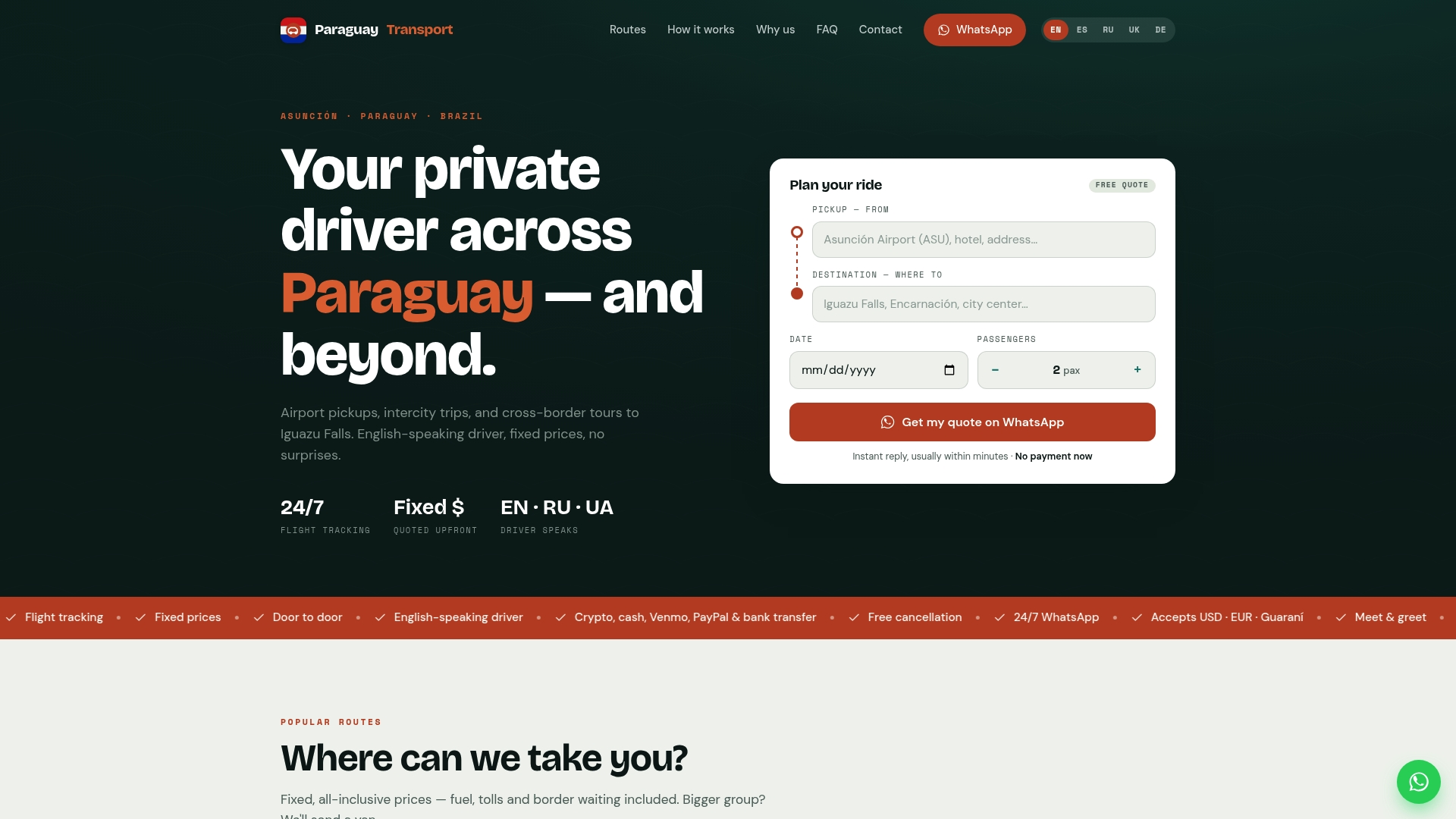
Paraguaytransport offers private driver services with fixed, upfront pricing, flight tracking for airport pickups, and door-to-door delivery with no additional transfers. Drivers speak English and Spanish, which removes the communication barrier that makes travel stressful for older adults and their families. Whether you need an airport transfer in Asunción, an intercity trip, or a tailored itinerary, Paraguaytransport builds the schedule around your loved one’s pace and comfort. Contact Paraguaytransport directly to discuss your family’s specific transport needs and get a fixed quote before the trip begins.
FAQ
What is the difference between door-to-door and door-thru-door service?
Door-to-door means the driver walks the senior to and from the vehicle at both ends of the trip. Door-thru-door means the driver escorts the senior all the way inside the destination building, including through lobbies and up stairs, which is critical for seniors with mobility or cognitive impairments.
How far in advance do I need to book senior transportation?
It depends on the service type. On-demand private services can dispatch in as little as 30 minutes, while volunteer and subsidized programs typically require 2 to 5 business days of advance notice.
How do I find affordable senior transportation in my area?
Contact your local Area Agency on Aging and ask to speak with a mobility manager. They specialize in connecting caregivers with subsidized, volunteer, and specialized transport options based on location and eligibility.
Can seniors book rides without using a smartphone app?
Yes, and most prefer it. About 80% of seniors prefer phone-based booking to smartphone apps, so look for providers that offer a direct phone reservation option.
What is a standing reservation and should I use one?
A standing reservation is a recurring booking that automatically schedules the same trip on a regular basis, often with the same driver. It reduces anxiety for seniors with frequent medical appointments and is strongly recommended for predictable, recurring trips.
Recommended
Need a ride in Paraguay?
Fixed-price transfers, airport pickups and day trips — quoted upfront on WhatsApp.