 Paraguay
Skip Border Hassle: Asunción to Campo Grande in 11–12 Hours
The distance between Asunción and Campo Grande runs roughly 635 to 789 kilometers, depending on which route you take. Flying is fastest but almost always involves a connection, buses take 13 to 15 hours across at least two carriers, and driving or hiring a private transfer takes about 11 to 12 hours door to door. Which one you pick comes down to how much time you have and how much hassle you are willing to tolerate at the border.
TL;DR:
- Flights from Asunción to Campo Grande require at least one connection, with one-way fares starting around $166 and total travel time including layovers typically over several hours.
- The bus journey, costing $40 to $70, involves multiple legs crossing into Brazil and can take 13 to 15 hours, demanding careful planning and managing several tickets.
- Driving or hiring a private transfer takes approximately 11 to 12 hours and offers a fixed schedule with added comfort, English-speaking drivers, and simplified border procedures.
- Informal shared rides or shuttle vans are available for the border crossing but lack reliability and fixed prices, making them unsuitable for the full trip.
- Weather during the rainy season (November to March) can cause delays across all options, especially for driving or overland travel, so flexible scheduling is advisable.
Table of Contents
- Fastest, Cheapest, or Most Comfortable: Asunción to Campo Grande at a Glance
- Are There Direct Flights From Asunción to Campo Grande?
- What’s the Best Bus Route From Asunción to Campo Grande?
- How Far Is the Drive From Asunción to Campo Grande?
- Crossing the Paraguay-Brazil Border: What Travelers Need to Know
- When Should You Book, and What Should You Expect to Pay?
- Why ParaguayTransport Handles This Route Well
- What Are the Customs Rules at the Paraguay-Brazil Border?
- Is It Safe to Travel Between Asunción and Campo Grande?
- Are There Shared Rides or Informal Transport Options?
- Does Weather Affect Travel Along This Route?
- My Take on Planning This Trip
- Book a Private Transfer From Asunción to Campo Grande
- Sources
Fastest, Cheapest, or Most Comfortable: Asunción to Campo Grande at a Glance
Before booking anything, decide which trade-off matters most to you. Nobody gets all three: speed, low cost, and comfort don’t come in the same package on this route.
- Fastest: flying. Total door-to-door time usually lands within several hours once you count a layover, security, and ground transport on both ends. That’s faster than the bus but slower than most people expect from a flight covering under 800 kilometers, because there’s no reliable nonstop option.
- Cheapest: bus. Multi-leg overland travel from the Asunción terminal, across the border, and into Campo Grande typically runs $40 to $70 depending on the operators and seat class you choose. It’s also the slowest and most physically demanding option, since you’re changing buses and clearing immigration on foot.
- Most comfortable: private transfer. A door-to-door private driver covers the same roughly 11 to 12 hour drive as self-driving, but with an English-speaking driver, flight tracking if you’re combining it with an arriving flight, and no need to manage the border crossing yourself.
If speed is the priority, skip ahead to the flights section below. If you’re traveling on a tight budget and don’t mind a long day, the bus breakdown covers exactly which terminals and operators to use. And if reliability and not dealing with immigration lines solo is worth paying for, the private transfer section explains how that works in practice.
One thing worth noting up front: none of these options is dramatically better on every front. The bus is cheap but grueling. Flying saves hours but rarely saves money once you add ground transport on both ends. Driving yourself gives you control but means navigating a foreign border crossing without any help. Match the option to what you actually need this trip.
Are There Direct Flights From Asunción to Campo Grande?
No. There’s no regular nonstop service between Silvio Pettirossi International Airport in Asunción and Campo Grande International Airport, and route-timetable listings generally mark nonstop schedules on this pair as inactive. Every itinerary you’ll find requires at least one connection, usually routed through a hub in Brazil or occasionally through São Paulo or another regional airport.
Aggregators like Expedia commonly list GOL and LATAM among the carriers serving this corridor, though the exact airlines and routing change depending on the day and season. A connecting flight from Asunción to Campo Grande usually takes several hours total, with the duration depending greatly on how long your layover runs. A tight 45 minute connection and a 4 hour layover produce very different travel days even though the flying time itself barely changes.
Fast fact: Expedia’s flight listings show one-way fares starting near $166, with sample roundtrip prices around $294. Those numbers move constantly based on demand and how far out you book, so treat them as a starting reference rather than a guarantee.
A few practical points if you’re booking a flight for this route:
- Check the layover airport’s typical delay patterns before committing to a short connection window.
- Book directly through the airline or a major aggregator rather than a third-party reseller you haven’t used before, since itinerary changes on connecting routes are common.
- If your flight lands late in Campo Grande or Asunción, arrange ground transport in advance rather than hunting for a taxi at an unfamiliar airport at night.
- Consider a service with flight tracking for pickup, since a delayed connection can shift your arrival time by hours without much warning.
The lack of a nonstop option surprises a lot of first-time travelers on this route. Asunción and Campo Grande are closer to each other than many domestic routes within Brazil, but demand isn’t high enough to support direct service, so airlines route passengers through a connecting city instead. If your schedule can’t absorb the uncertainty of a layover, that’s the strongest argument for looking at ground transport instead.
What’s the Best Bus Route From Asunción to Campo Grande?
Overland travel is the budget option, and it works, but it’s a multi-leg trip that requires some planning. You won’t find a single bus ticket that takes you from the Asunción terminal straight to Campo Grande. Instead, you’re stitching together two or three separate legs, each with its own carrier and ticket.
The most common sequence looks like this:
- Asunción to Pedro Juan Caballero. Start at the Estación de Buses de Asunción (EBA), the city’s main long-distance terminal. Multiple operators run this leg, and official EBA itineraries list departure times, operator names, and contact numbers you can check before you travel. San Luis S.A. is one of several lines that appear in the terminal’s published schedules.
- Cross into Ponta Porã. Pedro Juan Caballero sits directly on the border with the Brazilian town of Ponta Porã. You’ll typically deboard, walk or take a short taxi across, and clear passport control before picking up onward transport on the Brazilian side.
- Ponta Porã to Dourados or Nova Alvorada do Sul. Composite route data shows this leg connecting through one of these two towns depending on which operator and schedule you catch.
- Onward to Campo Grande. The final leg brings you into Campo Grande’s bus terminal, completing a trip that generally totals 13 to 15 hours door to door, per the same route estimates.
Fares for the full multi-leg journey typically fall between $40 and $70, depending on how many legs you’re buying, whether you choose a semi-cama or standard seat, and which operators you use. That’s a meaningful savings over flying, but it comes at the cost of a full day (or more) of travel and the extra friction of managing multiple tickets.
Here’s something that trips people up: Brazilian carriers on this route often only sell tickets within Brazil, meaning you can’t always book the full itinerary in advance from Asunción. A practical workaround many travelers use is buying the first leg, Asunción to Pedro Juan Caballero, ahead of time through an EBA-listed operator, then purchasing the Brazil-side legs once you reach the border or in Ponta Porã itself.
Pro Tip: Build in at least an hour of buffer time at the Pedro Juan Caballero to Ponta Porã crossing. Immigration lines move unpredictably, and if you’re catching a connecting bus on a tight schedule, a slow queue can mean missing it entirely.
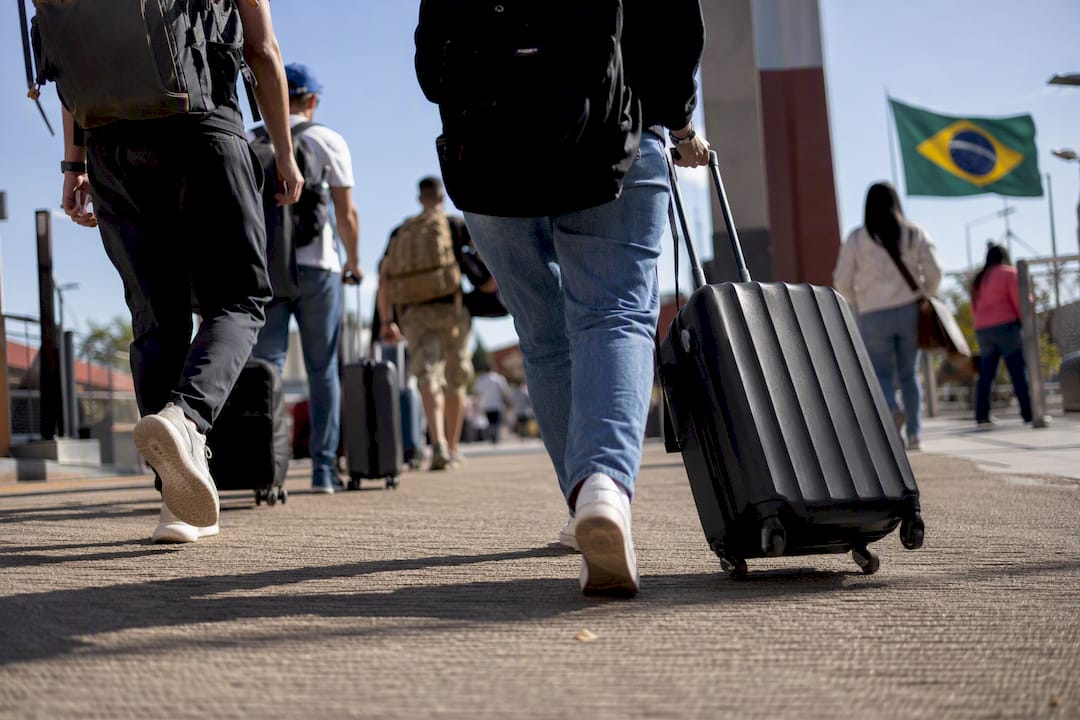
A few more things worth planning around: keep your luggage with you through the crossing rather than checking it through, since you’re physically walking between terminals. Bring snacks and water, because border towns don’t always have great food options right at the terminal. And if your itinerary lands you traveling overnight, book a seat with a reclining option if the operator offers one. Sitting upright for 14 hours on rigid seats is its own kind of ordeal.
How Far Is the Drive From Asunción to Campo Grande?
If you’d rather control your own schedule, driving or hiring a private car covers the trip in about 11 to 12 hours, roughly the same route the bus follows but without the multi-leg ticketing and terminal changes. Rome2Rio’s route data puts one common routed option at about 482.6 miles, or roughly 777 kilometers, with an estimated driving time near 11 hours 30 minutes. Other route selections push the total distance closer to 635 kilometers or as far as 789, depending on which highways and border crossing you use.
The main route runs from Asunción east toward Pedro Juan Caballero, crosses into Brazil at Ponta Porã, then continues through Brazilian highways toward Campo Grande. It’s the same border crossing bus passengers use, just without the terminal transfers.
If you’re driving yourself or arranging a hired vehicle, plan around this checklist:
- Passport valid for entry into Brazil, checked against current entry requirements before you leave.
- Vehicle registration and proof of ownership, since Brazilian border officials will want to verify the car matches its documents.
- Insurance coverage valid in Brazil. A domestic Paraguayan policy usually won’t cover you once you cross, so confirm you have appropriate cross-border coverage before you go.
- Cash in small denominations for tolls and any incidental fees along the Brazilian highway network.
Realistically, plan for one long driving day rather than trying to squeeze in sightseeing stops. Fuel up before crossing the border, since prices and station availability shift once you’re on the Brazilian side, and build in rest breaks every couple of hours if you’re doing the drive solo.
Crossing the Paraguay-Brazil Border: What Travelers Need to Know
The Pedro Juan Caballero to Ponta Porã crossing is the main gateway for this route, whether you’re on a bus, driving yourself, or riding in a private transfer. Handling it well comes down to preparation more than luck.
Confirm entry requirements for Brazil before you travel, since rules can shift and vary by nationality. Check an official government source rather than relying on secondhand travel forum advice, particularly if you’re not traveling on a Paraguayan or Brazilian passport.
One detail that catches people off guard: Campo Grande runs on a time zone typically one hour behind Asunción. If you’re timing a connection, a flight arrival, or a border crossing against a schedule, build that hour into your math or you’ll end up confused about whether you’re early or late.
Bus passengers handle their own immigration formalities on foot, physically walking their luggage through passport control between the two terminals. A private transfer works differently. A driver who does this crossing regularly, like those with ParaguayTransport, can guide you through the paperwork and timing so you’re not guessing what line to stand in.
Before you cross, make sure you have:
- Cash in both Guaraníes and Brazilian Reais for small fees or last-minute purchases.
- A local SIM card or confirmed international roaming, since connectivity can be spotty right at the crossing.
- Photocopies of your passport and any visa documentation, kept separate from the originals.
Pro Tip: Screenshot your hotel reservation and any onward travel proof before you cross. Border officials occasionally ask for it, and cell service at the crossing itself isn’t always reliable enough to pull it up on demand.
When Should You Book, and What Should You Expect to Pay?
Booking timing matters more for flights than for the other two options. Fares on aggregators like Expedia fluctuate constantly, and that sample range of roughly $166 to $294 for one-way and roundtrip tickets tends to climb the closer you get to your travel date, especially around holidays.
Snapshot: flights run roughly $166 to $294 depending on direction and season; buses run $40 to $70 for the full multi-leg journey; private transfers are quoted as a fixed rate before you travel, so there’s no last-minute price surprise.
For buses, book the first leg out of Asunción a few days ahead through an EBA-listed operator, especially during peak travel periods. The Brazil-side legs are usually easier to buy at the border or in Ponta Porã itself since availability is generally better there.
Private transfers work on a different model entirely. Instead of a fluctuating fare, you get fixed upfront pricing quoted before the trip starts, which means no guessing what the final cost will be. A few tactics that reduce risk no matter which option you choose:
- Confirm your bus or flight schedule 24 hours before departure, since connecting services occasionally shift times without much notice.
- If flying, choose a transfer service that offers flight tracking so your pickup adjusts automatically if your arrival changes.
- Keep a printed or downloaded copy of your itinerary in case you lose signal at a border crossing or airport.
Why ParaguayTransport Handles This Route Well
A private transfer solves the exact problems that make this trip stressful for a lot of travelers: unpredictable connections, a border crossing that involves paperwork in two languages, and the physical grind of hauling luggage between bus terminals. ParaguayTransport builds its service around removing those friction points specifically.
The core setup is straightforward. English-speaking drivers handle communication so you’re not trying to explain a delayed flight or a missed connection in a language you don’t speak fluently. Flight tracking means your driver adjusts pickup timing automatically if your inbound flight runs late, so you’re not stranded at an unfamiliar airport. Door-to-door service means no transfers between vehicles, and fixed upfront pricing means you know the cost before you leave.
This setup tends to matter most in a few specific situations: families traveling with kids and a lot of luggage, business travelers who can’t afford a missed connection to derail a meeting schedule, and non-Spanish speakers who’d rather not navigate immigration lines and bus terminal changes solo.

On the border crossing itself, a driver familiar with the Pedro Juan Caballero to Ponta Porã crossing can guide you through the paperwork sequence and timing, which cuts down on the guesswork and the fatigue that comes with managing it yourself. If you’re planning this trip and want a fixed quote, ParaguayTransport can put one together for you before you travel.
What Are the Customs Rules at the Paraguay-Brazil Border?
Crossing from Paraguay into Brazil comes with standard customs allowances that most tourists never bump up against, but it’s worth knowing the basics before you go. Personal belongings for your own use, like clothing, electronics, and typical travel gear, generally cross without issue. Where travelers run into trouble is bringing back large quantities of goods purchased for resale, since border authorities on both sides watch for commercial-volume purchases disguised as personal luggage.
If you’re driving your own vehicle across, customs officials will want to see your registration and proof of ownership matching the vehicle you’re driving, along with your passport. Bringing a car that isn’t registered in your name can trigger extra questioning or delays, so if you’re borrowing or renting a vehicle for the crossing, carry documentation authorizing you to drive it internationally.
Duty-free allowances exist for goods purchased across the border, but the specific limits change periodically and depend on your nationality and length of stay, so it’s worth checking current limits with an official source rather than relying on what a fellow traveler tells you at the terminal. Alcohol, tobacco, and electronics tend to draw the most scrutiny if you’re carrying more than a reasonable personal quantity.
For most travelers making a single trip between Asunción and Campo Grande, customs formalities add only a few extra minutes to the immigration process. It’s really only an issue if you’re carrying goods well beyond typical personal use, or if your vehicle paperwork doesn’t clearly match who’s driving.
Is It Safe to Travel Between Asunción and Campo Grande?
The route between these two cities is a well-traveled corridor for tourists, business travelers, and cross-border commuters, and none of the three transport modes carries unusual risk when handled with normal travel precautions. That said, each option has its own considerations worth knowing.
Border towns like Pedro Juan Caballero and Ponta Porã see higher rates of informal commerce and smuggling activity than either capital city, given their location directly on the frontier. Staying inside the terminal areas, keeping your belongings close, and avoiding unnecessary wandering through unfamiliar border-town streets after dark is reasonable caution rather than paranoia.
Long-haul bus travel overnight carries the ordinary risks of any overnight journey: fatigue, unfamiliar stops, and the need to stay alert to your belongings while half-asleep. Keep valuables in a bag you can keep on your person rather than in overhead storage or a cargo hold.
Self-driving the route means several hours on Brazilian highways you may not know well, often at night if you start late from Asunción. If you’re not comfortable with unfamiliar roads after dark, plan your departure time so most of the drive happens in daylight.
A private transfer sidesteps most of these concerns since a driver familiar with the route handles the navigation, timing, and border logistics. If solo travel or overnight bus rides make you uneasy, that’s a legitimate reason to pay for the added predictability rather than a sign of excessive caution.
Are There Shared Rides or Informal Transport Options?
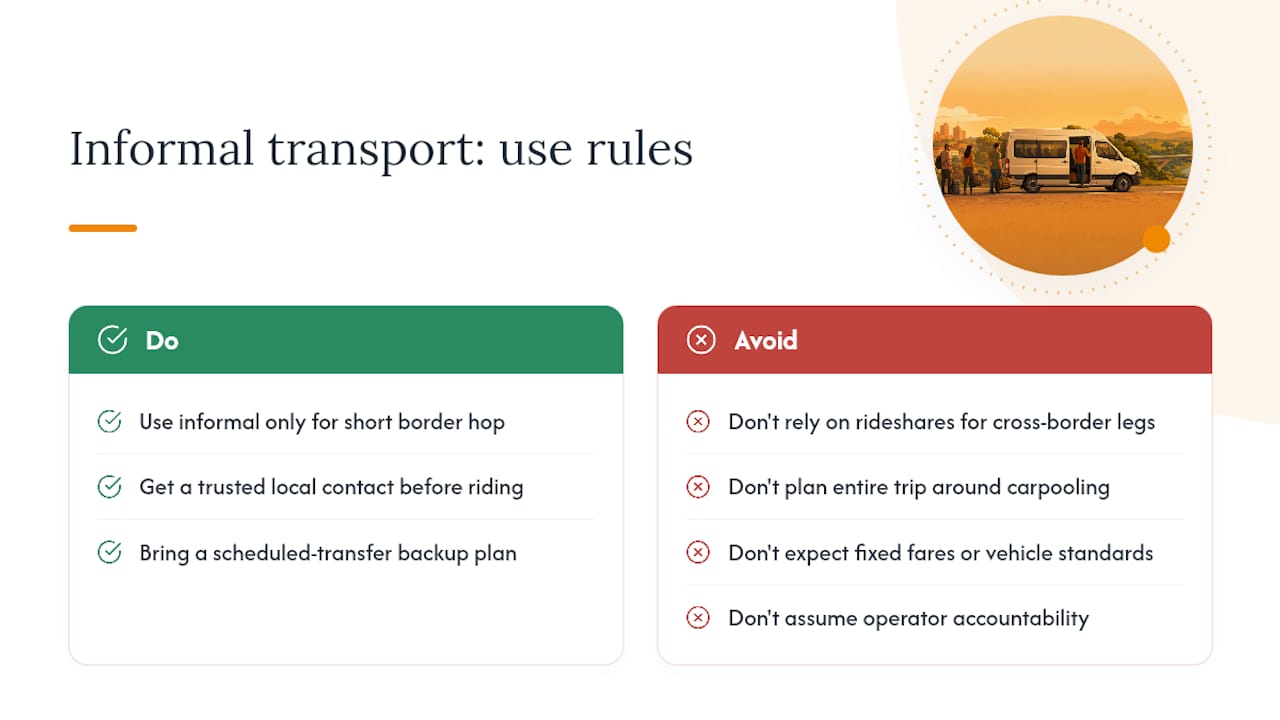
Beyond scheduled flights, buses, and private transfers, informal transport options exist along this corridor, though they come with tradeoffs worth understanding before you consider them. Shared taxis and informal shuttle vans occasionally operate the shorter legs, particularly the Pedro Juan Caballero to Ponta Porã border hop, where local drivers offer quick crossings for a negotiated fare.
These informal options can save time compared to walking across and finding onward transport yourself, but they come without the accountability of a licensed, registered operator. Fares aren’t fixed, vehicle conditions vary, and there’s no customer service line to call if something goes wrong.
Ride-sharing apps have limited utility here since coverage drops off outside major cities, and cross-border rides aren’t something most apps support at all given the immigration formalities involved. You won’t find a rideshare option that takes you seamlessly from Asunción to Campo Grande the way you might within a single city.
Carpooling arrangements, informal or organized through local community boards, exist in some parts of Paraguay and Brazil but aren’t a reliable or well-documented option for this specific international route. If you come across one through a trusted local contact, it can work, but it’s not something to plan a trip around without a backup option in place.
For most travelers, the informal options make sense only for the short border-town hop, not for the full journey. Sticking with scheduled operators, or a private transfer that handles the whole route, removes the guesswork that comes with negotiating fares and vehicle conditions on the fly.
Does Weather Affect Travel Along This Route?
Paraguay and this part of Brazil share a subtropical climate, which means the wettest months, generally between November and March, bring the highest chance of delays across all three transport modes. Heavy rain can slow highway travel significantly, particularly on stretches of road near Ponta Porã and Dourados where drainage isn’t always built for intense downpours.
Bus schedules tend to hold up reasonably well even during the rainy season, though a severe storm can push arrival times back by an hour or more on the overland legs. If you’re on a tight connection between bus legs, a rainy-season buffer of extra time is worth building in.
Flights face their own weather-related risk, since connecting itineraries mean a storm delay at your layover airport can cascade into a missed connection. This is one more reason a longer layover window makes sense during the wetter months, even if it stretches your total travel time.
Driving during heavy rain on unfamiliar Brazilian highways is where weather risk shows up most directly. Reduced visibility and slicker roads on a route you don’t know well add real risk, so if you’re self-driving and rain is in the forecast, consider delaying departure by a few hours rather than pushing through a storm on a highway you’ve never driven.
Winter months, roughly June through August, bring drier conditions and generally more predictable travel across all three options, making that window a reasonable choice if your trip dates are flexible.
My Take on Planning This Trip
Most travel advice on this route treats flying, the bus, and driving as interchangeable options that differ only in price. They’re not. The bus is genuinely the budget choice, but it demands physical stamina and comfort with ambiguity that a lot of trip planning content glosses over. You’re managing multiple tickets, a border crossing on foot, and an overnight stretch, often without a firm confirmation on your final leg until you’re standing at a Brazilian terminal.
Flying gets oversold as the fast option. It’s faster than the bus, but a 6 to 8 hour door-to-door time with a layover isn’t the quick hop people expect for a sub 800 kilometer distance, and pricing swings enough that “fast” doesn’t always mean “worth it.”
What conventional guides underplay is how much the border crossing itself, not the distance, drives the difficulty of this trip. If you’re not comfortable navigating immigration formalities in Portuguese and Spanish on your own, that’s the detail that should shape your decision more than the raw hour count. A private transfer earns its cost specifically by removing that one variable, not by being inherently better travel.
— David
Book a Private Transfer From Asunción to Campo Grande
ParaguayTransport is the alternative to piecing together bus tickets or gambling on a tight flight connection: one fixed price, one English-speaking driver, and no terminal changes between Asunción and Campo Grande. You skip the immigration line on foot, the luggage hauling between border terminals, and the uncertainty of a Brazilian bus operator that only sells tickets locally.
The service covers the full route door to door, with flight tracking built in if you’re timing the trip against an arriving flight, and drivers who communicate in English so nothing gets lost at the border. Families traveling with kids, business travelers on a fixed schedule, and anyone who’d rather not manage a multi-leg crossing solo tend to get the most value from booking this way. It also pairs well with related trips, like the route options covered in ParaguayTransport’s Asunción to Encarnación guide, if you’re stringing together multiple stops in the region. For a broader look at how private transfers compare to other airport pickup methods, this traveler’s guide to private airport transfer breaks down what to expect from the service model generally.
Ready to lock in a fixed price for your trip? Request a quote directly through ParaguayTransport and get your pickup, border assistance, and drop-off confirmed before you leave Asunción.
Sources
- Asunción to Campo Grande – 4 ways to travel via plane, bus, and car — Rome2Rio
- HORARIOS Y DESTINOS – Estación de Buses de Asunción (EBA)
- Asuncion to Campo Grande flight listings and sample prices — Expedia
Recommended
Need a ride in Paraguay?
Fixed-price transfers, airport pickups and day trips — quoted upfront on WhatsApp.