 Paraguay
How to Plan a Trip to South America in 2026
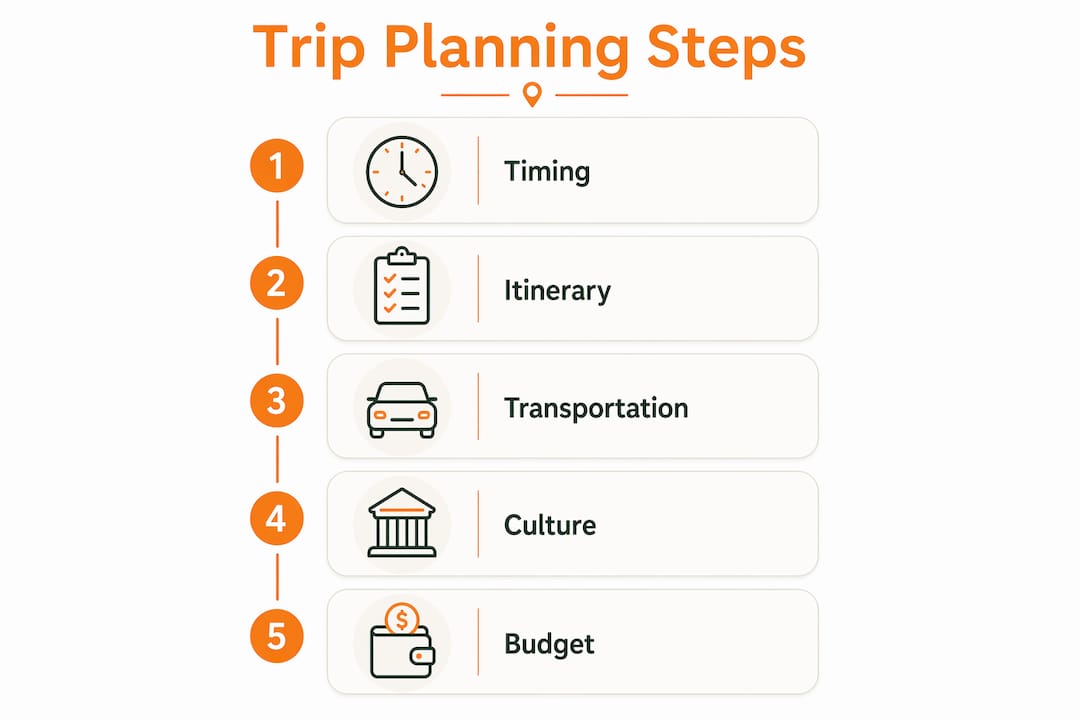
Planning a trip to South America means organizing five core elements: timing, itinerary design, transportation, cultural immersion, and budget. The continent spans 12 countries, three major climate zones, and altitudes ranging from sea level to over 15,000 feet. Get those elements right, and you get a trip that flows. Get them wrong, and you spend half your vacation in airports or recovering from altitude sickness. This guide covers how to plan a trip to South America the way experienced travelers do: with a focused route, realistic pacing, and smart money decisions.
How to choose the best time for your South America trip
No single best time exists for a South America trip because the continent’s regions peak at different times. That fact alone separates successful trips from frustrating ones.
The shoulder seasons, march through may and september through november, deliver the best balance of weather, crowd levels, and cost. Traveling during shoulder seasons also reduces expenses and crowd discomfort compared to peak months. That combination makes them the default choice for first-time travelers.
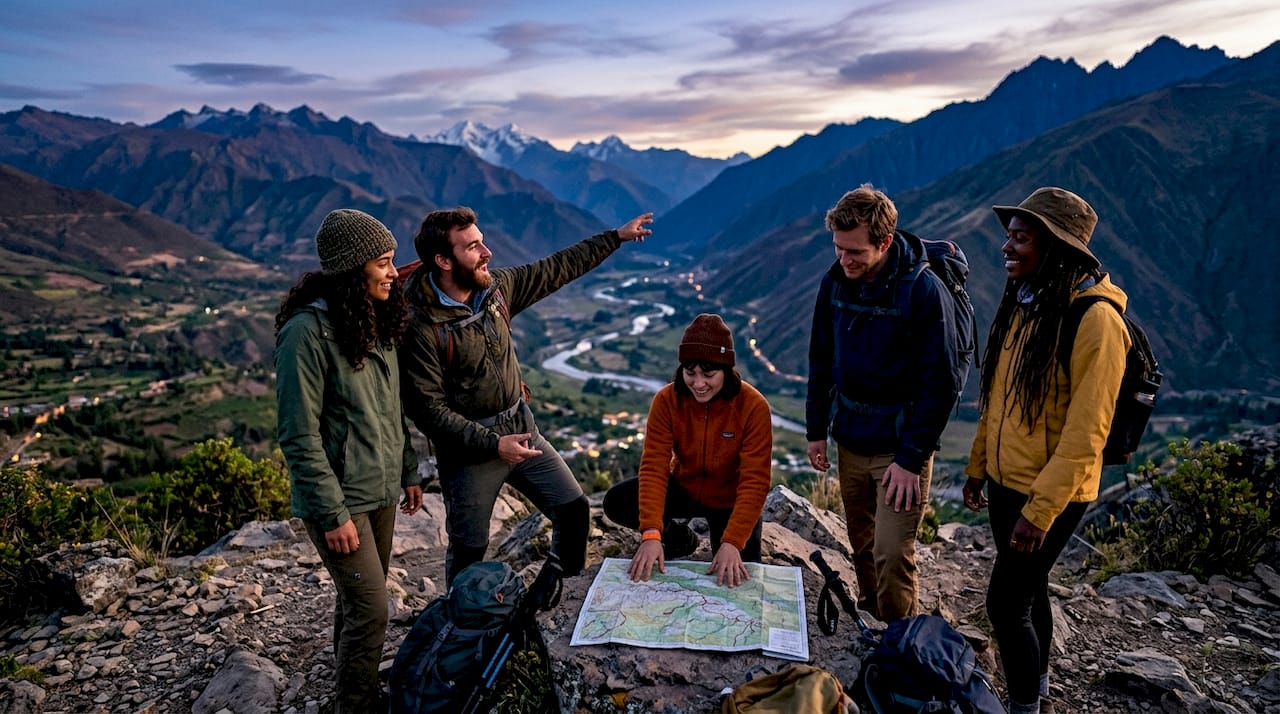
Regional timing matters more than continental timing. Patagonia trekking is only feasible between september and march, which is the Southern Hemisphere summer. The Amazon is most accessible in the dry season, june through november. The Atacama Desert in Chile is visitable year-round, but the Bolivian salt flats look most dramatic after the rainy season ends in april.
Altitude adds another layer. Cities like Cusco, Peru, sit at 3,400 meters, and La Paz, Bolivia, sits at 3,500 meters. Travelers arriving at those elevations need 1–2 acclimatization days before any strenuous activity. Build those days into your calendar before you book anything else.
Pro Tip: Match your trip dates to your hero destination first. Lock in Patagonia or Machu Picchu dates, then build the rest of your itinerary around them.
- Patagonia: september through march
- Amazon: june through november (dry season)
- Bolivian Salt Flats: april through june (post-rain clarity)
- Andes cities: year-round, with acclimatization days required
- Rio de Janeiro: april through june (mild, fewer crowds than Carnival)
How to build a practical South America itinerary
The most common mistake in planning a South America itinerary is trying to cover too much ground. Limiting a two-week trip to one or two countries prevents travel burnout and allows for deeper experiences. Attempting more than two countries in a short trip usually results in fatigue and missed moments.
Build your itinerary around one or two “hero” regions, then fill in supporting destinations nearby. A Peru-focused trip might anchor on Machu Picchu, add Cusco and the Sacred Valley, then finish in Lima. A Patagonia trip might center on Torres del Paine in Chile, extend into Argentine Patagonia, and include a stop in Buenos Aires. Both approaches minimize airport time and maximize time on the ground.
Building itineraries around experiences rather than destination checklists prevents frustration and increases satisfaction. Ask yourself what you want to feel, not just what you want to see. Adventure, culture, food, wildlife, and history each pull toward different regions and pacing styles.
Anchor bookings are non-negotiable for popular sites. Machu Picchu entrance permits and Patagonia campsite reservations sell out months in advance. Book those first, then arrange flights and accommodation around them. Waiting until two weeks before your trip is a reliable way to miss the best slots.
- Identify your hero region. Choose one or two anchor destinations that define the trip’s purpose.
- Book high-demand permits first. Machu Picchu, the W Trek in Torres del Paine, and Iguazu Falls all require advance reservations.
- Add buffer days. Include at least one free day per week for delays, rest, or unexpected discoveries.
- Plan logical geographic flow. Move in one direction rather than backtracking across the continent.
- Confirm acclimatization days. Schedule low-activity arrival days for any destination above 9,000 feet.
Pro Tip: Use a free day in Cusco or La Paz to walk local neighborhoods and eat at market stalls. Those unplanned hours often become the trip’s best memories.
What are the best transportation options in South America?
Transportation in South America requires a different mindset than Europe. Vast distances and limited infrastructure mean that moving between cities takes longer and costs more than travelers expect. Planning connections carefully saves both time and money.
Regional flights are the fastest option for long distances. Flying from Lima to Cusco takes one hour. The same trip by bus takes 20+ hours. Regional flights improve travel efficiency but require advance booking and careful attention to connection times at hub airports like Lima’s Jorge Chávez International or Bogotá’s El Dorado International.
Bus travel is the backbone of South American ground transport. It ranges from basic local coaches to luxury overnight sleeper buses with reclining seats and meals. The overnight bus from Buenos Aires to Mendoza, for example, is a genuine value: you travel while you sleep and arrive rested. Budget travelers rely on buses for the majority of their ground movement.
Cross-border travel by bus is possible throughout the continent but requires patience and correct documentation. Border crossings can take two to four hours depending on the crossing and time of day. Carry printed copies of your passport, visa, and any required entry forms. For a detailed look at moving between countries, the cross-border travel guide from Paraguaytransport covers practical steps for land crossings.
| Transportation mode | Best for | Key consideration |
|---|---|---|
| Regional flights | Long distances, time-sensitive legs | Book 4–6 weeks in advance |
| Overnight sleeper bus | Budget travel, medium distances | Comfort varies by operator |
| Local bus | Short city-to-city hops | Cheapest option, slower pace |
| Private driver | Airport transfers, day trips | Fixed pricing, no navigation stress |
| Car rental | Remote regions like Patagonia | Check permit requirements at borders |
- Always carry your passport at border crossings, not just a photocopy.
- Book regional flights through local carriers for better route coverage.
- Overnight buses save a night’s accommodation cost on long routes.
- Private drivers, like those offered by Paraguaytransport, remove the stress of navigating unfamiliar cities on arrival.
How to experience South America authentically
Authentic cultural experiences in South America require slowing down. South American travel rhythm prioritizes flow over speed, which contrasts sharply with the rapid pace many travelers bring from home. Accepting that pace shift is the single biggest adjustment first-time visitors need to make.
Local markets are the most direct entry point into daily life. In Cusco’s San Pedro Market, in Buenos Aires’ Mercado de San Telmo, and in Cartagena’s Bazurto Market, you see what people actually eat, buy, and talk about. Street food and market meals cost $2–5 per plate and deliver more flavor and cultural context than most sit-down restaurants at ten times the price.
Language matters more than travelers expect. Spanish is the primary language in 9 of 12 South American countries, with Portuguese in Brazil. Learning 20–30 basic phrases in Spanish or Portuguese before you arrive opens doors that English alone cannot. Locals respond warmly to any genuine effort, even imperfect attempts.
Pro Tip: Ask your hotel or hostel staff where they eat lunch. They will point you to the neighborhood spot that locals actually use, not the tourist-facing restaurant on the main plaza.
- Tip 10% at sit-down restaurants in most countries; tipping is not standard at market stalls.
- Dress modestly when visiting churches and indigenous communities.
- Festivals like Inti Raymi in Cusco (june) and Carnival in Rio (february) require accommodation booked six months ahead.
- Altitude sickness is preventable. Drink coca tea, avoid alcohol on arrival day, and rest before hiking.
How to budget your South America trip
Daily travel costs in South America vary widely by country and travel style. Budget travelers spend roughly $25–$50 per day in Bolivia and Peru, while Argentina and Chile run closer to $75–$100 per day for similar comfort. That range gives you a realistic baseline for planning.
The biggest budget lever is transportation. Overnight buses eliminate a night’s accommodation cost. Cooking one meal per day in a hostel kitchen cuts food costs significantly. Traveling during shoulder seasons reduces both accommodation rates and entrance fees at popular sites.
Group tours for specific experiences, like a Galapagos cruise or an Amazon lodge stay, often cost less per person than private arrangements. They also handle logistics that would otherwise consume hours of planning. For independent travelers, the tradeoff is worth considering on the most complex legs of the trip.
| Country | Budget daily cost | Mid-range daily cost |
|---|---|---|
| Bolivia | $25–$40 | $60–$80 |
| Peru | $30–$50 | $70–$100 |
| Colombia | $35–$55 | $75–$110 |
| Chile | $60–$80 | $120–$160 |
| Argentina | $50–$75 | $100–$140 |
- Withdraw cash in larger cities where ATM fees are lower.
- Use a no-foreign-transaction-fee credit card for hotels and larger purchases.
- Street food and market lunches cut daily food costs to $10–$15 in most countries.
- Book accommodation with free cancellation so you can adjust if plans shift.
Key Takeaways
A focused South America trip built around one or two hero regions, booked well in advance, and paced for cultural depth delivers far more value than a rushed multi-country sprint.
| Point | Details |
|---|---|
| Shoulder seasons win | Travel in march–may or september–november for better weather, lower costs, and fewer crowds. |
| Limit your countries | Restrict a two-week trip to one or two countries to avoid burnout and see more of each place. |
| Book anchors first | Reserve Machu Picchu permits and Patagonia campsites months ahead before booking anything else. |
| Plan for altitude | Schedule 1–2 acclimatization days before high-altitude activities in cities like Cusco or La Paz. |
| Budget by country | Daily costs range from $25 in Bolivia to $100+ in Chile; plan your route with cost differences in mind. |
What I’ve learned from planning South America trips
The travelers who enjoy South America most are the ones who stop treating it like a checklist. I’ve seen people burn through five countries in two weeks and come home exhausted, having seen everything and experienced nothing. The ones who slow down in one region, eat where locals eat, and leave space for the unexpected always return with better stories.
Flexibility is not a backup plan. It is the plan. Buses run late. Weather closes trails. Permits sell out. The travelers who build buffer days and hold their itinerary loosely adapt without frustration. The ones who schedule every hour spend half their trip anxious.
Book the high-demand experiences early. Machu Picchu, the W Trek, and the Galapagos have real capacity limits. Waiting costs you the experience entirely. Everything else, including accommodation, local tours, and restaurant reservations, can be arranged closer to your travel dates with no penalty.
South America rewards patience and curiosity in equal measure. Go with fewer expectations and more time than you think you need.
— David
Ground transportation that actually works in South America
Arriving in an unfamiliar South American city after a long flight is not the moment to figure out local transportation. Paraguaytransport provides private, English-speaking drivers for airport transfers and intercity trips in and around Paraguay, with fixed upfront pricing and no hidden fees.
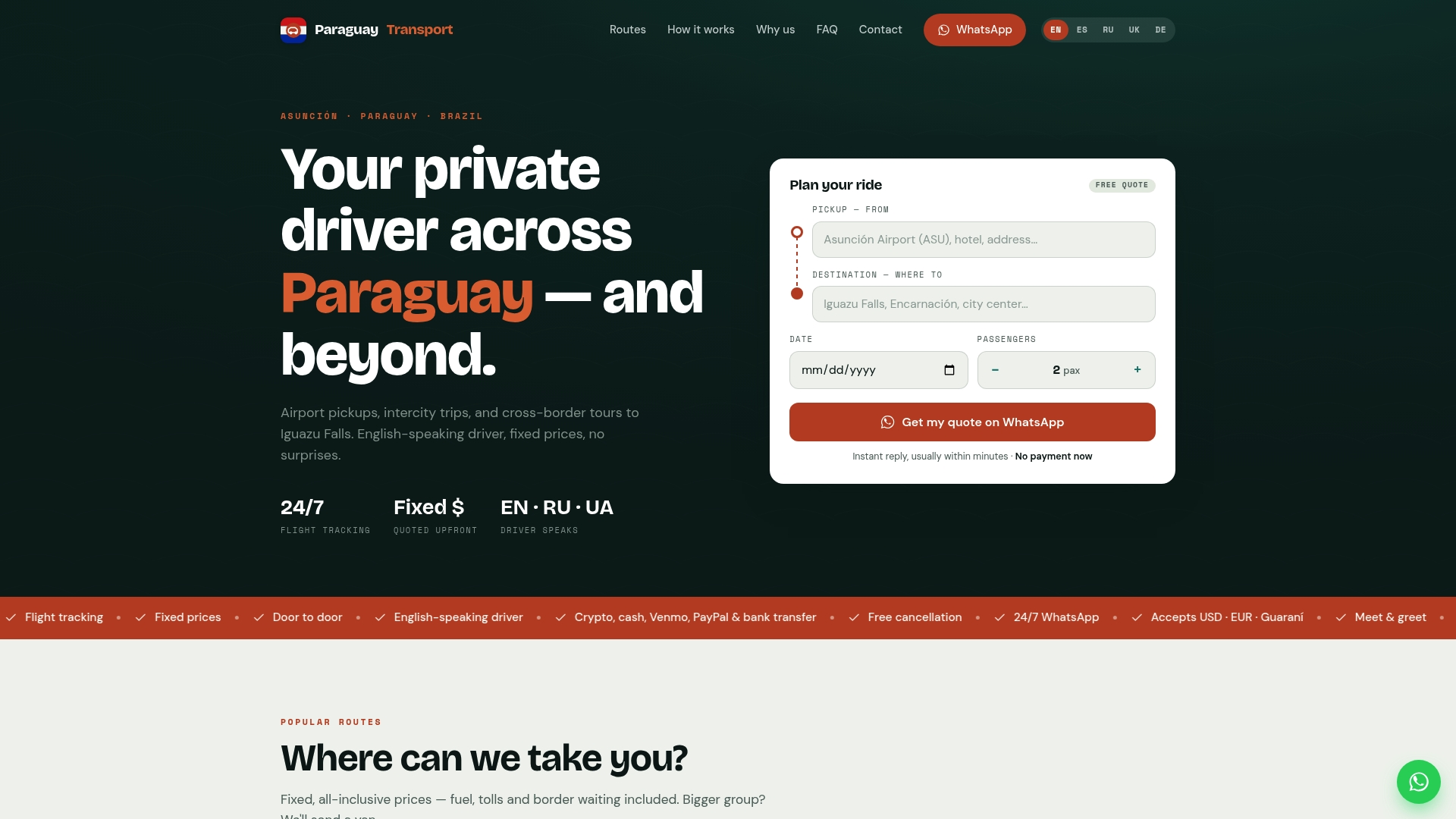
Paraguaytransport tracks your flight in real time, so your driver is there when you land, not when your flight was scheduled to land. Door-to-door service means no connecting shuttles or shared vans. For travelers who want to start their South America trip without a logistics headache, Paraguaytransport handles the ground transportation so you can focus on the experience. Learn more about hiring a personal driver for day trips and sightseeing around Paraguay.
FAQ
What is the best time to visit South America?
The shoulder seasons, march through may and september through november, offer the best balance of weather, crowd levels, and cost across most regions. Patagonia is the exception, with its prime trekking window running september through march.
How many countries should I visit in two weeks?
Experts recommend limiting a two-week trip to one or two countries. More than that leads to travel fatigue and prevents meaningful experiences at each destination.
How far in advance should I book Machu Picchu?
Book Machu Picchu entrance permits at least three to six months ahead. Popular permits sell out well before the travel date, especially for the Inca Trail and sunrise entry slots.
How do I avoid altitude sickness in South America?
Schedule 1–2 acclimatization days upon arrival in high-altitude cities like Cusco or La Paz. Drink plenty of water, avoid alcohol on your first day, and consider coca tea as a local remedy.
How much does a South America trip cost per day?
Daily costs range from roughly $25–$50 in Bolivia and Peru to $75–$100 in Chile and Argentina. Traveling during shoulder seasons and eating at local markets keeps costs toward the lower end of that range.
Recommended
Need a ride in Paraguay?
Fixed-price transfers, airport pickups and day trips — quoted upfront on WhatsApp.