 Paraguay
Door to Door Transport for Disabled: 2026 Guide
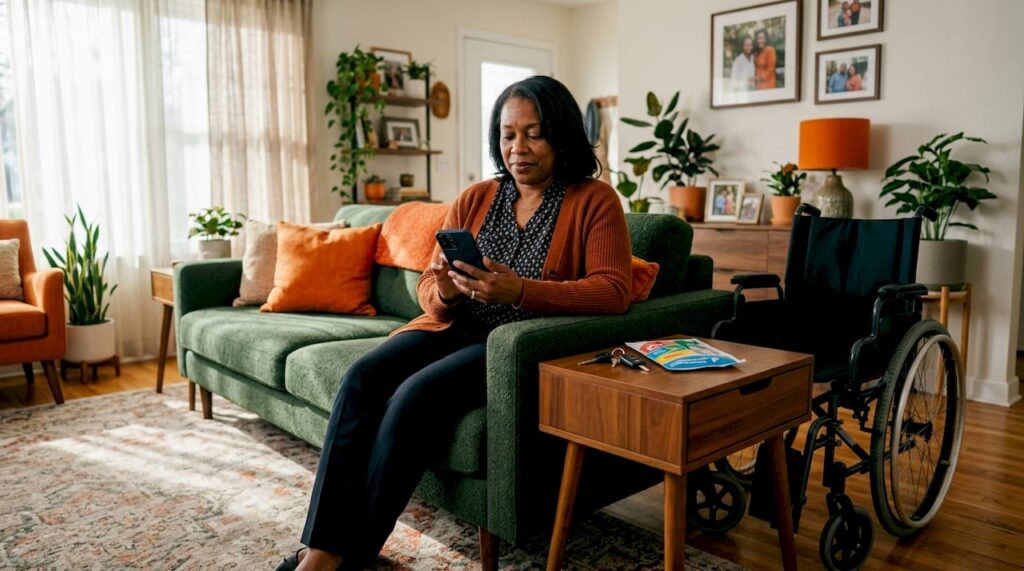
Door-to-door transport for disabled individuals is an ADA-mandated, fully accessible transportation service that moves riders from their home directly to their destination with trained support and purpose-built vehicles. The Americans with Disabilities Act requires public transit agencies to provide paratransit as a baseline, but private specialized transport providers go further with credentialed drivers, real-time tracking, and personalized assistance. Whether you are a caregiver coordinating medical appointments or a person with a mobility impairment managing daily life, understanding your options makes the difference between a stressful trip and a safe, dignified one.
What types of door to door transport for disabled exist?
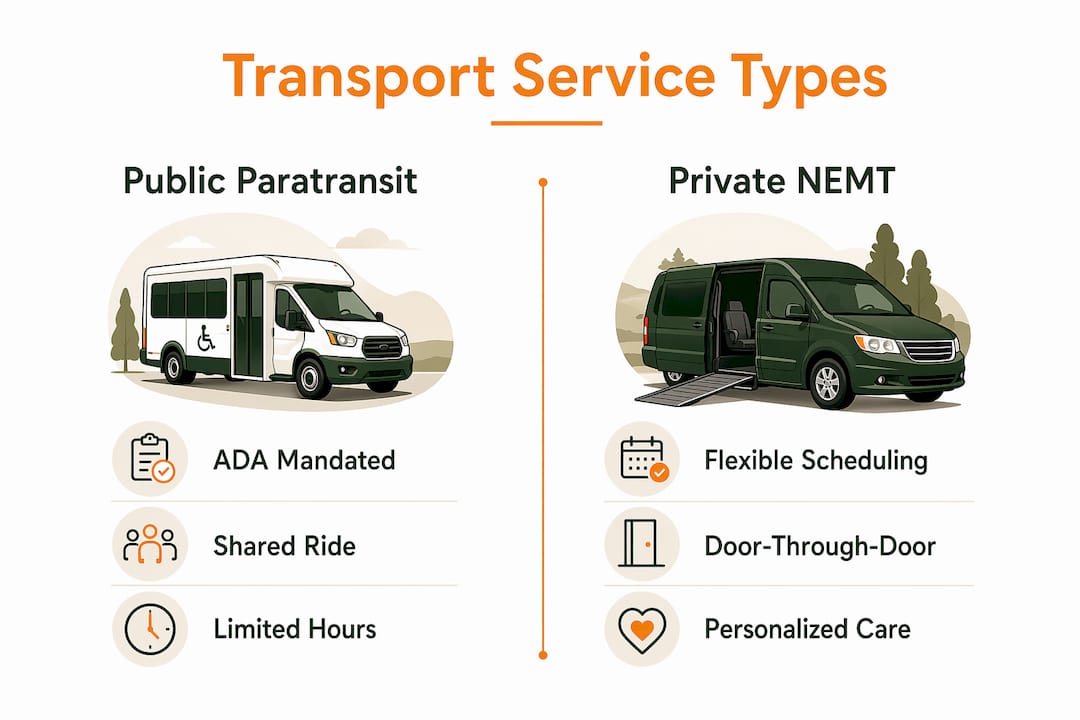
Two main categories cover most accessible transportation services: public paratransit and private specialized transport. Each serves different needs, and knowing which fits your situation saves time and prevents frustration.
Public ADA paratransit is the federally mandated baseline. The ADA requires transit agencies to provide paratransit within a 0.75-mile radius of fixed bus or rail routes. That boundary matters. If your destination falls outside it, the agency is not obligated to serve you. Paratransit also mirrors fixed-route operating hours, meaning it is not a 24/7 service. Many riders assume it works like a taxi. It does not.
Private non-emergency medical transport (NEMT) fills the gaps public paratransit leaves open. Private providers offer higher personalization, with drivers trained in 4-point wheelchair securement and CPR. These services typically operate beyond standard transit hours and cover destinations outside the paratransit service zone.
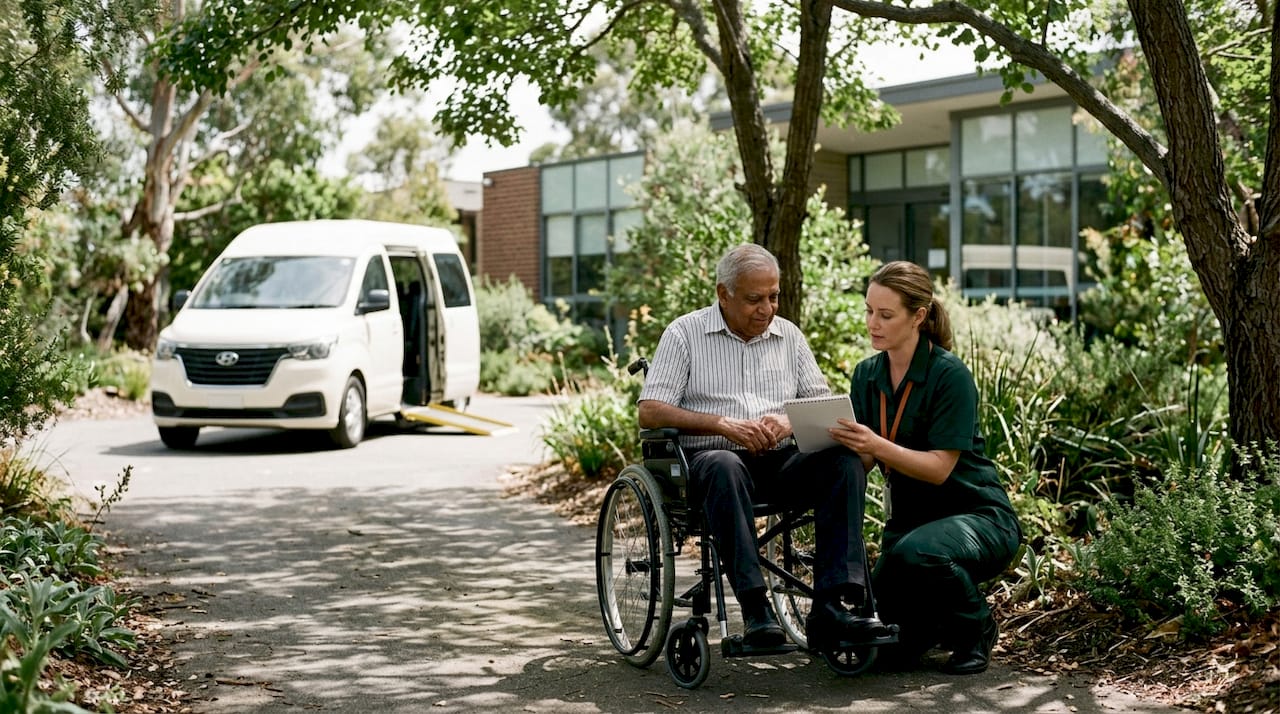
One distinction most guides skip: the difference between door-to-door and door-through-door service. Door-to-door means the driver picks you up at your front door and drops you at the destination entrance. Door-through-door service goes further, with the driver assisting you inside the building to a reception desk or waiting area. If you have significant mobility challenges, door-through-door is the level you need. Always confirm which service level a provider offers before booking.
Key vehicle features to look for in any specialized transport:
- Hydraulic or fold-out wheelchair lifts
- 4-point securement systems for wheelchairs
- Grab bars and non-slip flooring
- Trained drivers certified in passenger assistance
- Vehicles sized for power wheelchairs and scooters
Pro Tip: Ask the provider specifically whether their service is door-to-door or door-through-door. Many providers use the terms interchangeably, but the actual assistance level can differ significantly.
Who is eligible, and how do you arrange transport?
Eligibility for public paratransit requires certification by your local transit agency. The process is not automatic. You must apply, provide documentation of your disability, and in many cases complete a functional assessment. Certification can take several weeks, so apply well before you need the service.
Private NEMT providers generally have fewer eligibility barriers. Most require basic booking information, documentation of your mobility device, and sometimes a physician’s note for medical transport. Here is how to arrange private specialized transport step by step:
- Identify your needs. Determine whether you need door-to-door or door-through-door assistance, and whether a companion or Personal Care Attendant (PCA) will travel with you.
- Gather your device specifications. Collect the exact make, model, weight, and dimensions of your wheelchair or mobility device before calling.
- Contact providers and confirm service scope. Ask about operating hours, service area, and vehicle types available.
- Book with advance notice. Most providers require 24–48 hours notice. Some paratransit agencies require up to 72 hours.
- Confirm companion policies. Personal Care Attendants ride free on most paratransit and private services when the passenger presents valid ID or companion approval. Confirm this before the trip.
For caregivers coordinating transport for a family member, the companion policies for disabled passengers vary by provider and region. Always ask whether the PCA seat requires pre-registration.
Pro Tip: When booking, state your mobility device type, weight, and width precisely. Vague descriptions lead to wrong vehicle assignments and potential trip refusals on the day of travel.
How do these services keep riders safe and comfortable?
Safety in specialized transport for mobility impairment goes well beyond a standard seatbelt. The protocols that separate purpose-built accessible transport from a standard rideshare are specific and verifiable.
Driver qualifications are the first line of protection. Credentialed drivers in NEMT and private accessible transport complete training in CPR, first aid, passenger assistance techniques, and wheelchair securement. This is not optional training. It is a baseline requirement for reputable providers. Continuity of care through credentialed driver networks is especially critical for medically complex riders who depend on consistent, knowledgeable support.
Technology has changed what caregivers can expect from accessible transportation services. Specialized providers now use real-time tracking, incident reporting, and automated caregiver updates as standard features. A caregiver at work can monitor a parent’s trip in real time. That level of visibility is simply not available through standard taxis or rideshare apps.
The table below compares key safety and accessibility features across transportation types:
| Feature | Public paratransit | Private NEMT | Standard rideshare |
|---|---|---|---|
| Wheelchair lift or ramp | Yes | Yes | Rarely |
| 4-point wheelchair securement | Yes | Yes | No |
| Driver disability training | Required | Required | Not required |
| Real-time caregiver tracking | Limited | Yes | App-based only |
| Door-through-door assistance | Rarely | Yes (varies) | No |
| 24/7 availability | No | Often yes | Yes |
Rideshare apps lack the trained drivers and accessibility features that disabled passengers require. That gap is not a minor inconvenience. For a rider who depends on 4-point securement or boarding assistance, an untrained driver creates a genuine safety risk.
What practical challenges should you expect?
Paratransit is a shared-ride system. That single fact shapes the entire experience. Riders should allow a 60–90 minute buffer beyond their scheduled appointment time to account for multiple pickups and drop-offs along the route. Scheduling a medical appointment at 10:00 AM means planning to leave by 8:30 AM at the latest.
The shared-ride nature of paratransit also reflects what disability advocates call the “crip time” experience. Paratransit requires patience and schedule flexibility that standard transit riders never face. This is not a flaw in the system so much as a structural reality of shared accessible transport. Private NEMT providers reduce this problem significantly by offering dedicated vehicles, but at higher cost.
Common pitfalls first-time users encounter, and how to avoid them:
- Misreporting mobility device dimensions. Accessible vans have weight and size limits, and inaccurate information causes same-day refusals. Measure your device before booking.
- Assuming door-through-door is standard. Confirm the service level explicitly. Many providers offer door-to-door only unless you request and pay for additional assistance.
- Booking too late. Most paratransit agencies require advance notice of at least 24 hours. Private providers vary. Book as early as possible for medical appointments.
- Not confirming the return trip. Book both legs of the trip at the same time. Return pickups are not automatic.
For caregivers managing transport for elderly or disabled family members, the caregiver’s guide to door-to-door transportation covers additional scheduling strategies and provider evaluation criteria worth reviewing.
Pro Tip: Always confirm the driver’s name and vehicle description the night before the trip. This simple step prevents confusion at pickup and adds a layer of safety for riders traveling alone.
Key Takeaways
Door-to-door transport for disabled individuals requires choosing the right service level, confirming eligibility early, and communicating precise mobility device details to avoid day-of problems.
| Point | Details |
|---|---|
| Know your service level | Confirm whether a provider offers door-to-door or door-through-door assistance before booking. |
| Apply for paratransit early | ADA certification can take several weeks, so start the process well before you need the service. |
| Share device specs precisely | Accurate wheelchair dimensions and weight prevent vehicle mismatches and same-day refusals. |
| Build in buffer time | Allow 60–90 minutes beyond your appointment time when using shared-ride paratransit. |
| PCAs often ride free | Personal Care Attendants travel at no extra cost on most services with valid ID or companion approval. |
What I’ve learned watching accessible transport evolve
The biggest mistake I see caregivers and riders make is treating all accessible transportation services as equivalent. They are not. Public paratransit fulfills a legal obligation. Private NEMT providers fulfill a human one. The difference shows up in the details: whether a driver waits patiently while a rider navigates a building entrance, whether a caregiver gets a real-time update when the vehicle is delayed, whether the booking process accounts for a power wheelchair that weighs 300 pounds.
Technology has genuinely improved the private side of this market. Real-time tracking and automated notifications have moved from premium features to standard expectations. That shift matters enormously for caregivers who cannot be physically present for every trip.
What has not changed enough is the gap between what paratransit promises and what it delivers on a given Tuesday morning. The 0.75-mile service boundary, the shared-ride delays, the advance booking requirements: these are structural constraints that no amount of goodwill from drivers overcomes. Riders who understand these limits plan around them. Riders who do not get stranded.
My honest recommendation: use public paratransit for routine, flexible trips where timing is not critical. Use private specialized transport for medical appointments, airport transfers, and any trip where a missed connection has real consequences. The cost difference is real, but so is the reliability difference.
— David
Accessible transport in Paraguay with Paraguaytransport
Travelers with disabilities visiting Paraguay face a specific challenge: finding reliable, English-speaking transport that handles accessibility needs without requiring multiple transfers or last-minute coordination.
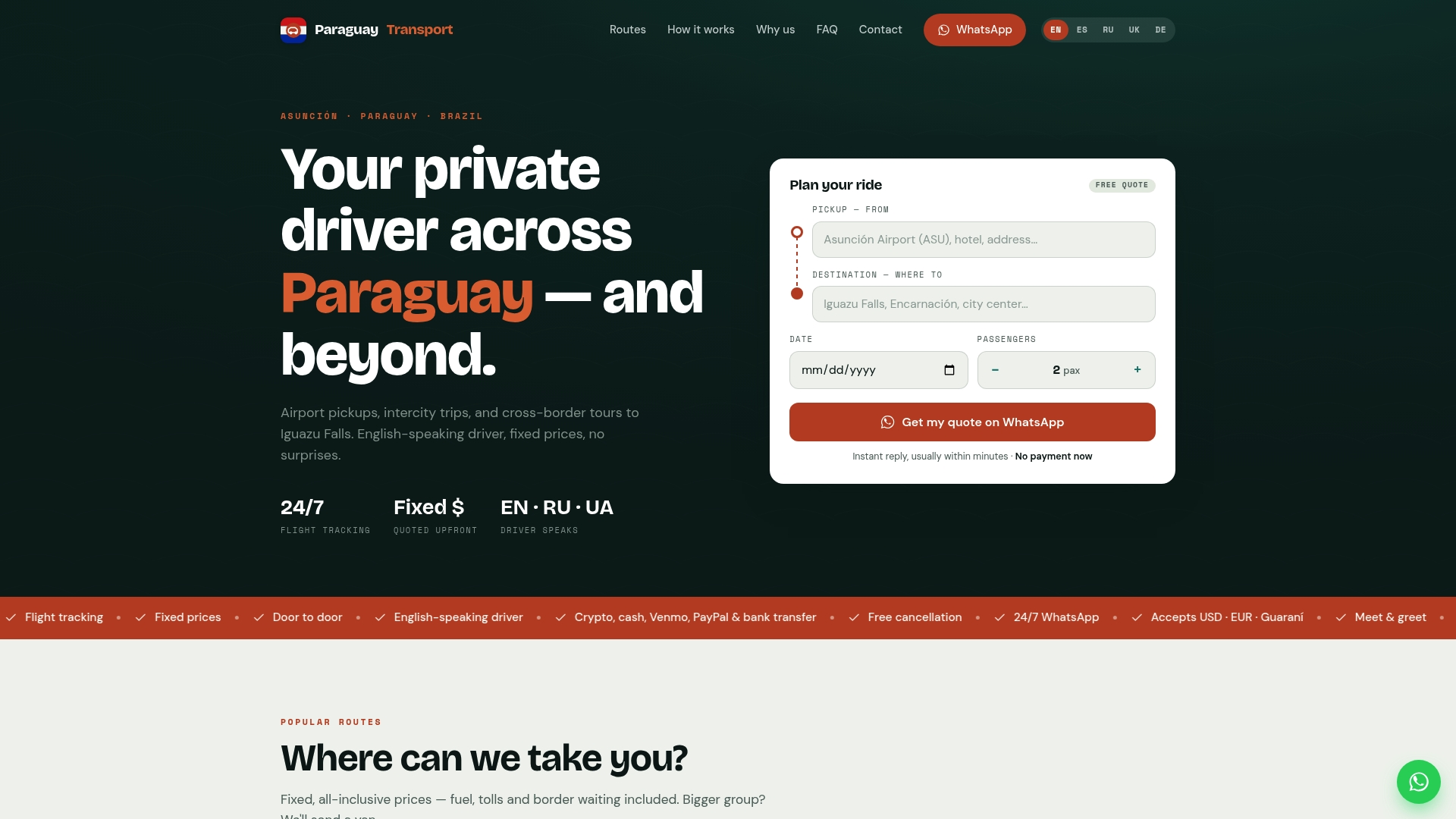
Paraguaytransport provides private door-to-door transport with fixed, upfront pricing and no hidden fees. Drivers speak English and Spanish, track flights for timely airport pickups, and handle intercity and cross-border trips with the same direct, single-vehicle service. For disabled travelers and their caregivers, that means no handoffs, no confusion, and a driver who knows the route before the trip begins. Contact Paraguaytransport to discuss your specific accessibility needs and confirm vehicle options for your travel dates.
FAQ
What is door-to-door transport for disabled individuals?
Door-to-door transport for disabled individuals is an accessible service that picks riders up at their home entrance and delivers them directly to their destination entrance, using vehicles equipped with wheelchair lifts and trained drivers.
How do I qualify for ADA paratransit?
You must apply for certification through your local transit agency and demonstrate that your disability prevents you from using fixed-route public transit. The process can take several weeks, so apply early.
What is the difference between door-to-door and door-through-door service?
Door-to-door service covers pickup and drop-off at building entrances. Door-through-door service adds assistance inside the building, guiding the rider to a reception desk or waiting area.
Can a caregiver or PCA ride along for free?
Personal Care Attendants ride free on most paratransit and private accessible transport services when the passenger presents valid ID or has companion approval registered with the provider.
How far in advance do I need to book accessible transport?
Most paratransit agencies require at least 24 hours notice, and some require up to 72 hours. Private NEMT providers vary, but booking 24–48 hours ahead is the standard recommendation for guaranteed availability.
Recommended
Need a ride in Paraguay?
Fixed-price transfers, airport pickups and day trips — quoted upfront on WhatsApp.